Overview
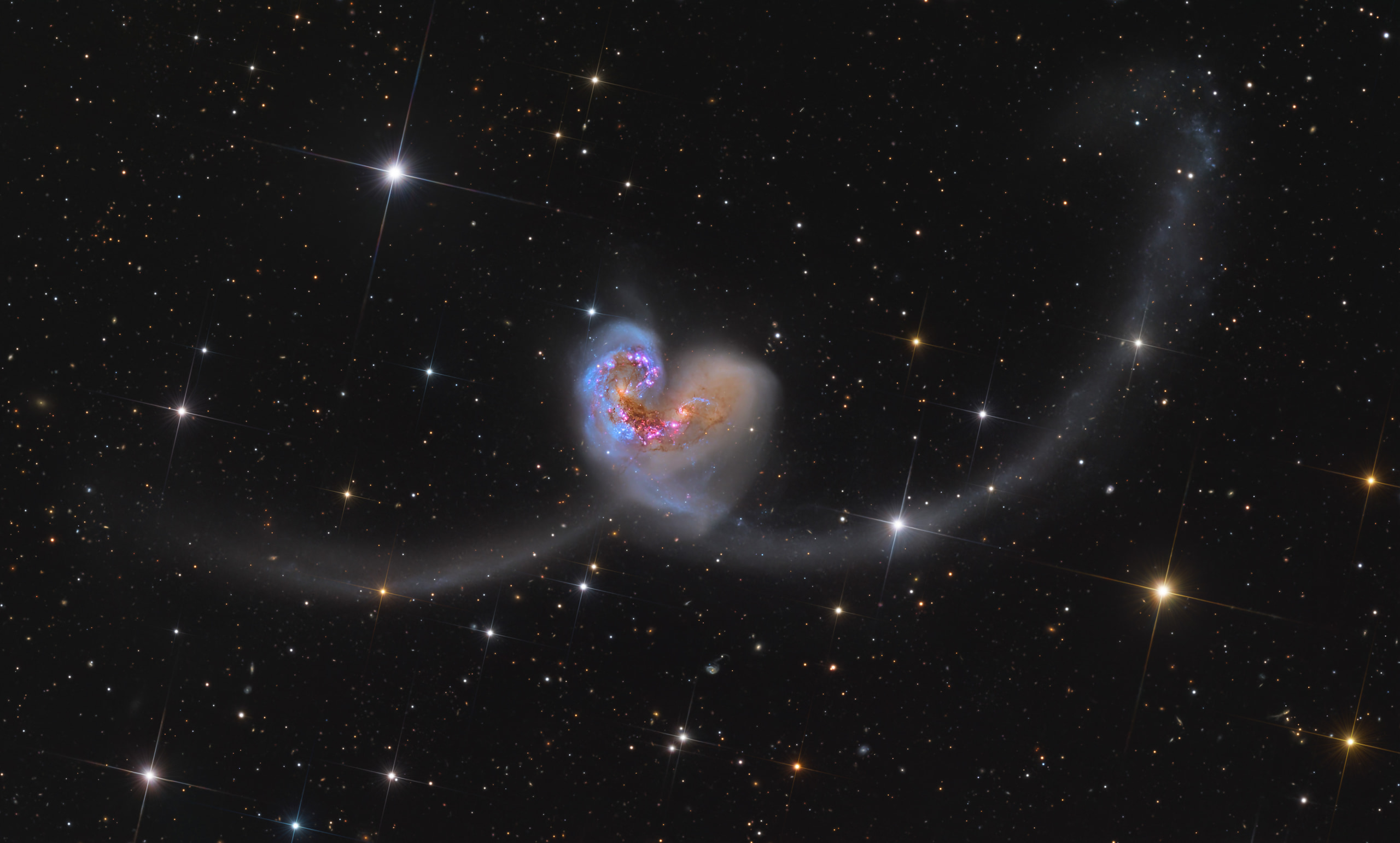
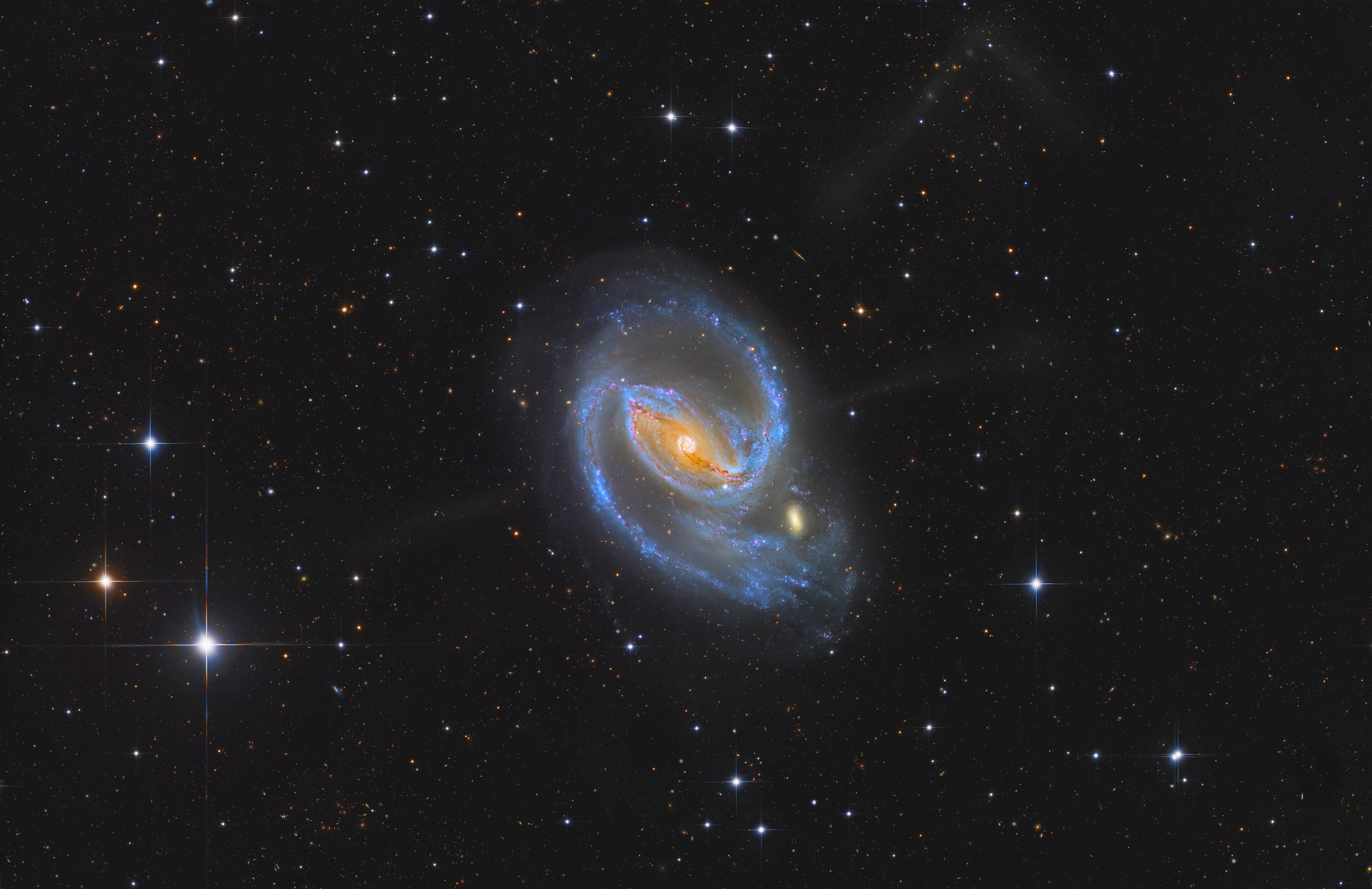
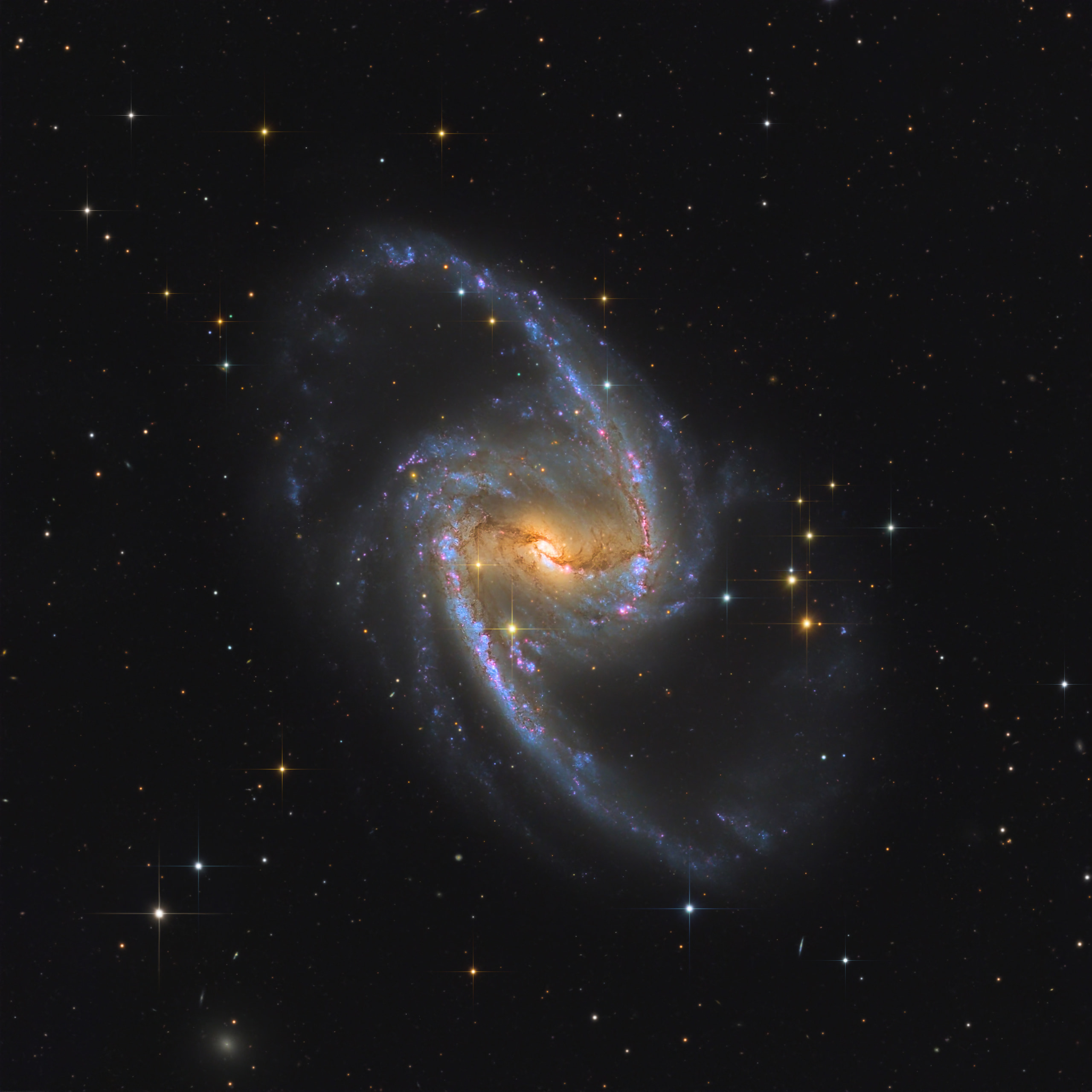
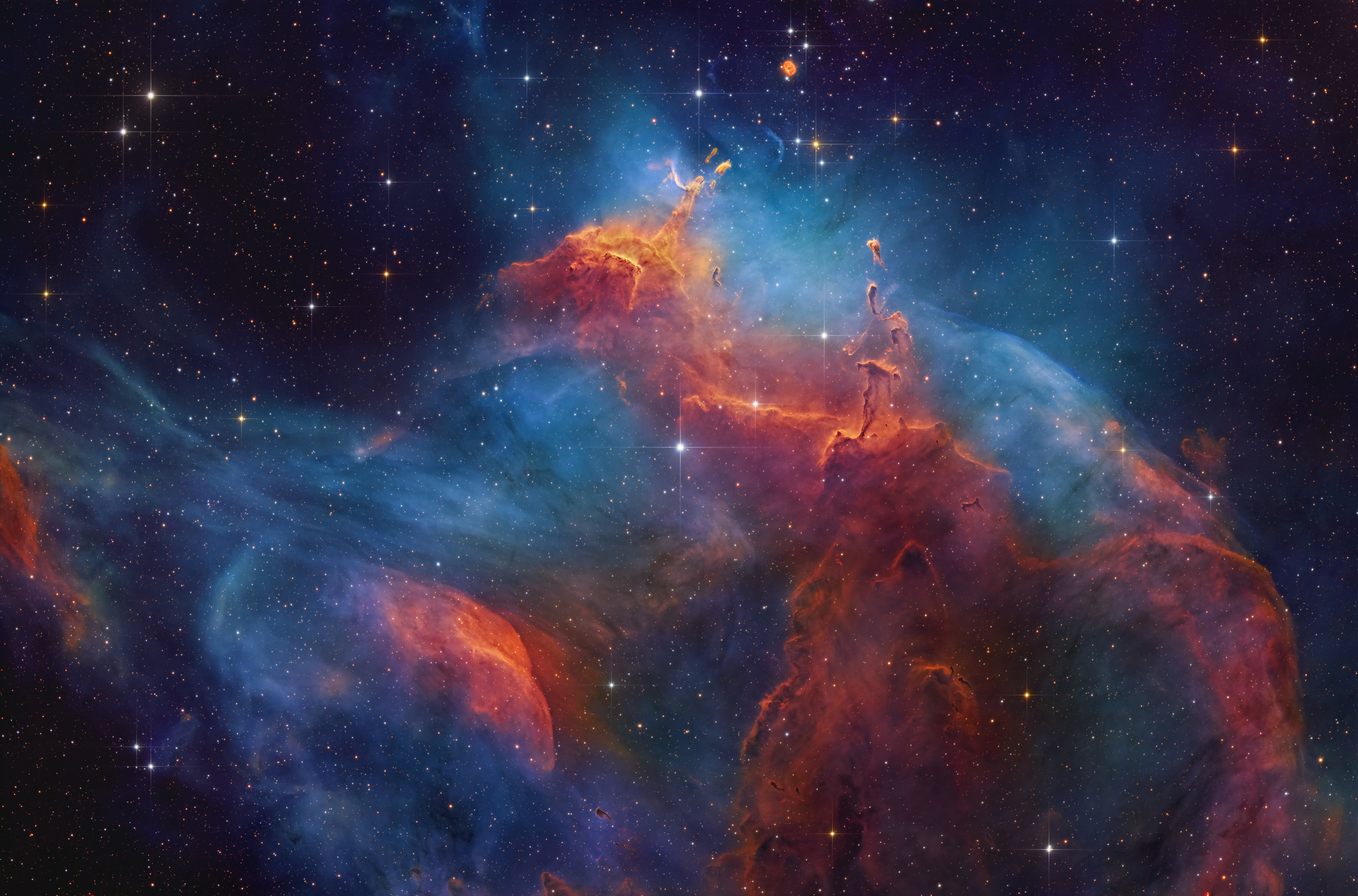
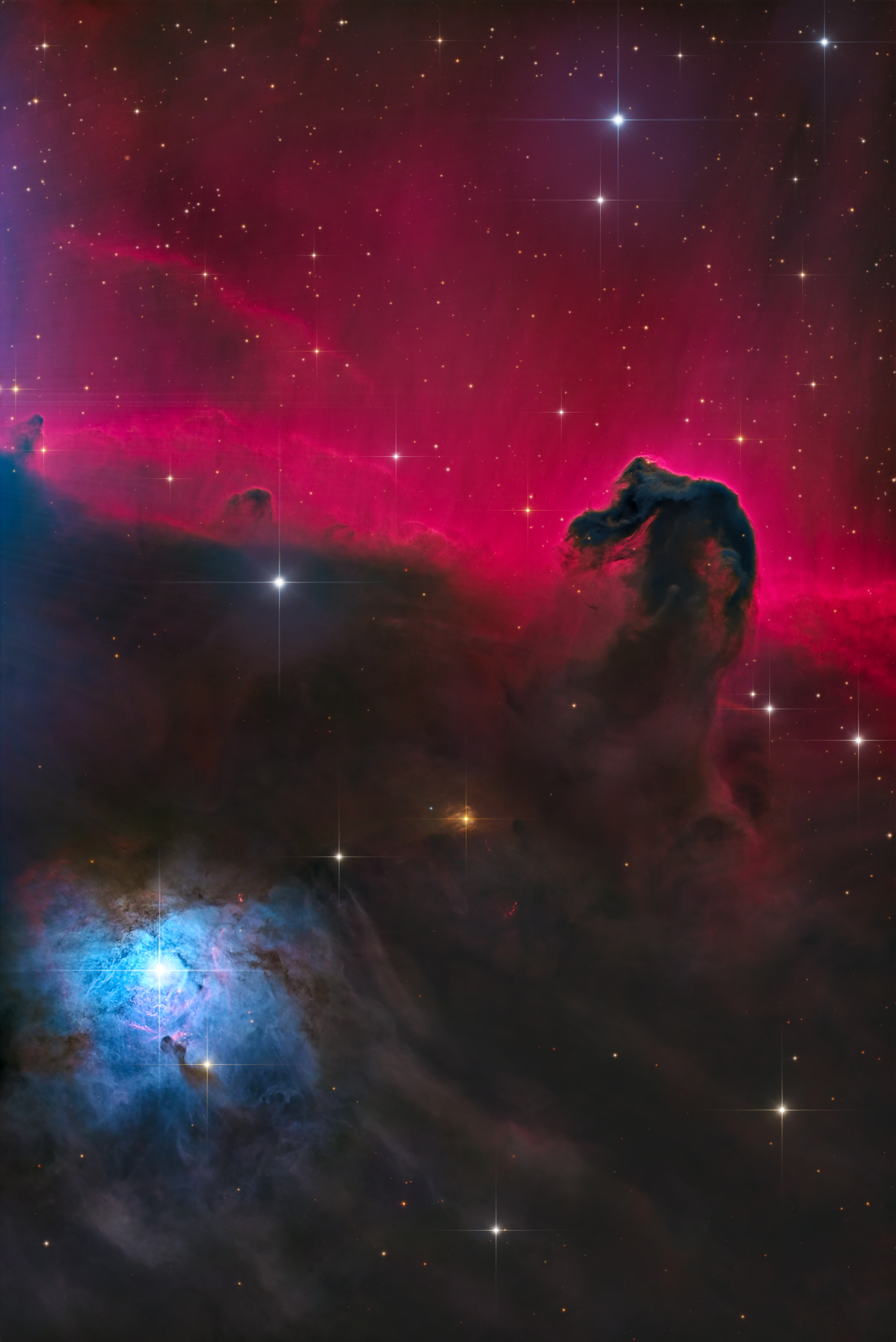
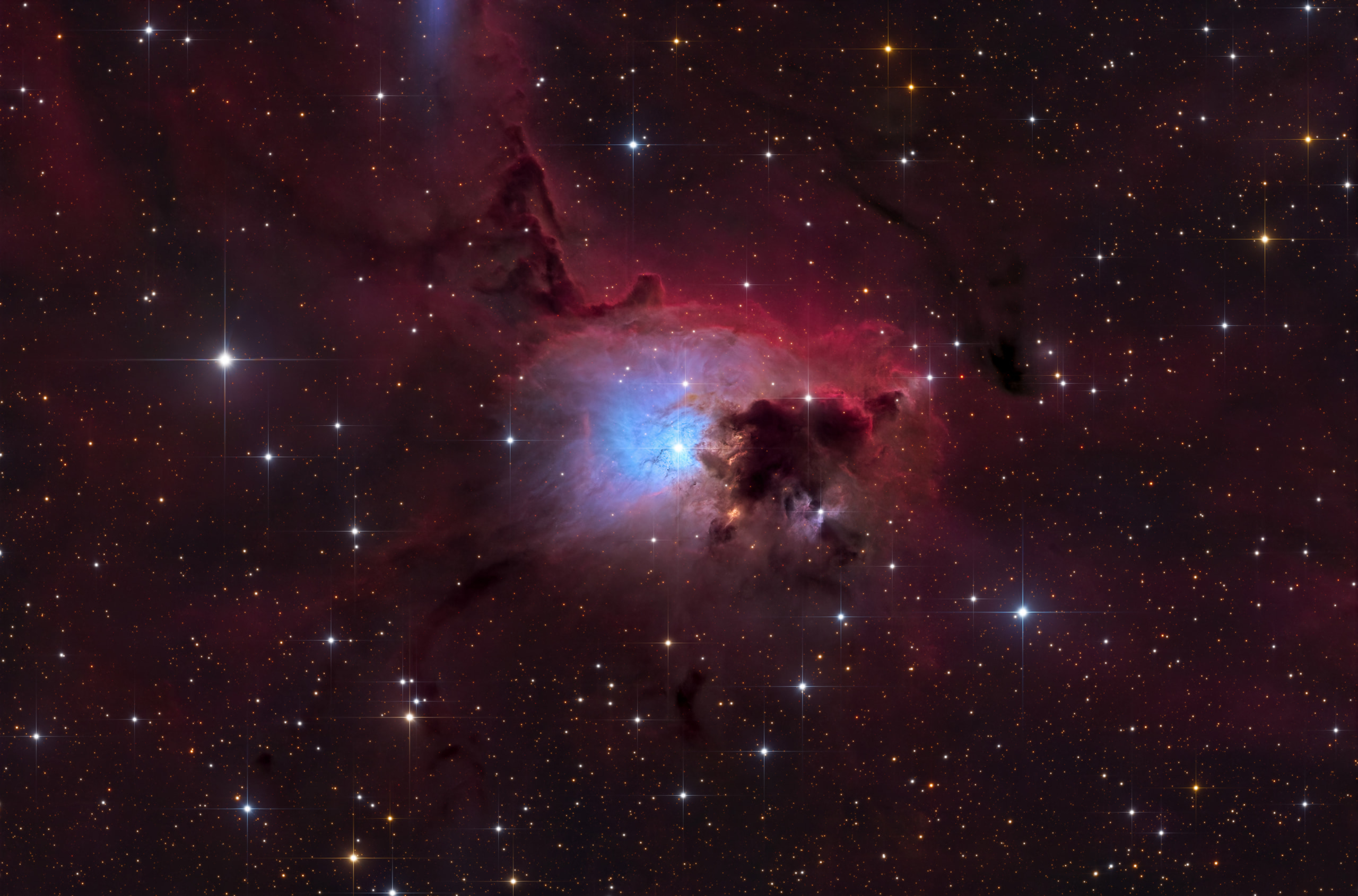
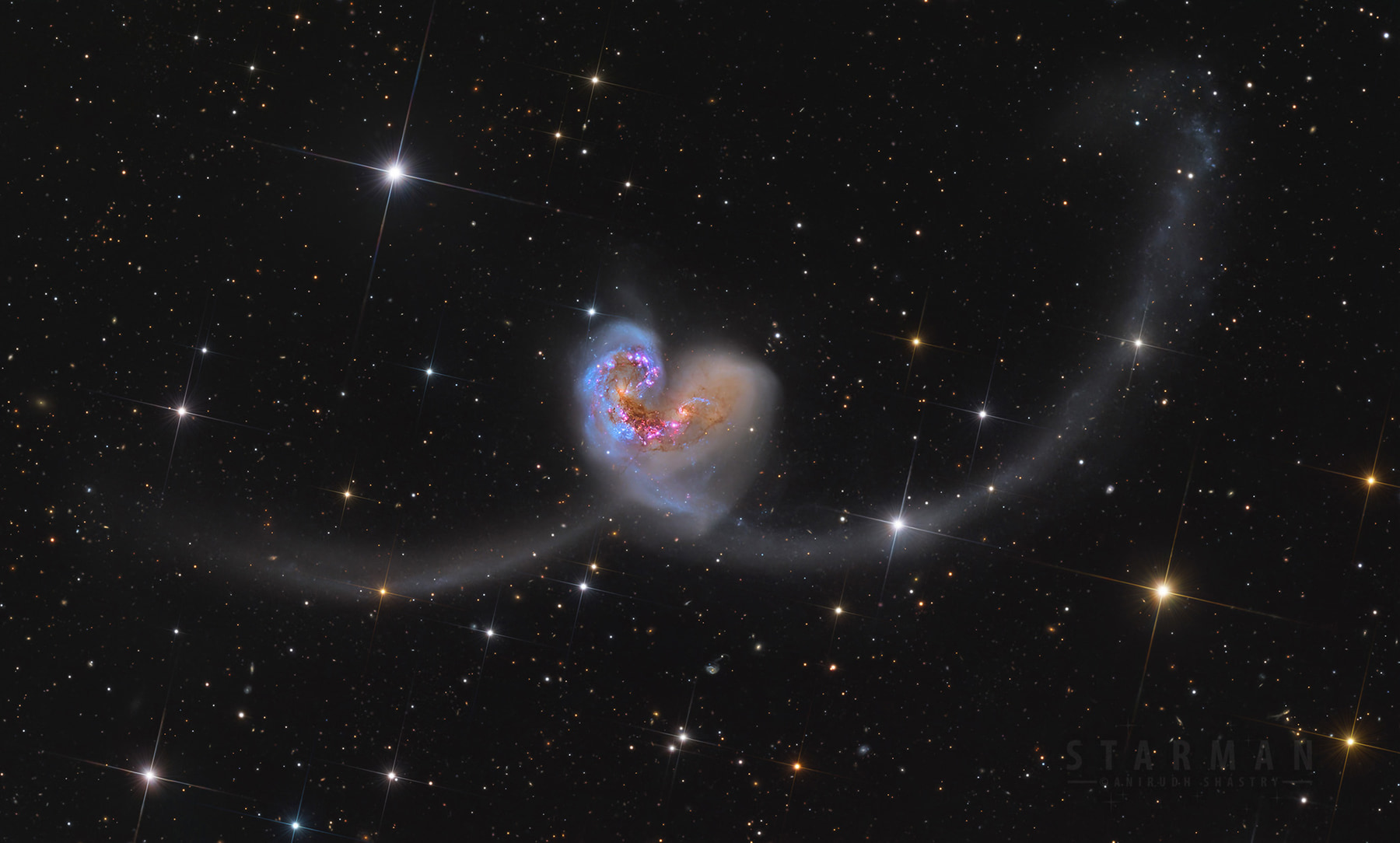
Locked in a slow, inevitable embrace some 45-70 million light-years away, the Antennae Galaxies are a vivid portrait of cosmic interaction and transformation. NGC 4038 and NGC 4039 are two once-separate spiral galaxies now entwined by gravity, their collision igniting waves of star formation and stretching vast tidal tails — like delicate antennae — far into intergalactic space.
In this image, soft blue arcs trace regions rich in young, hot stars, while glowing magenta knots mark intense stellar nurseries where gas clouds are collapsing under the strain of the encounter. Dust lanes, warm and textured, weave through the scene like echoes of the galaxies’ former structures, slowly being rewritten by time and gravity. The luminous core between them glows as a shared heartbeat—chaotic, radiant, and alive.
This is a moment frozen in a dance that spans hundreds of millions of years: destruction giving rise to creation, separation yielding unity. There is something quietly romantic here — a reminder that even on the grandest scales, beauty often emerges from connection, and light is born where worlds meet.
To better resolve the intricate structure within the galactic cores, I applied a 2x drizzle integration during stacking. This is a step I seldom employ, as my systems — paired with 3.76 µm pixels at long focal length — are typically already well into the oversampled regime. However, the exceptional seeing at Obstech warranted the experiment, and in this case, the data supported it: the finer sampling yielded a subtle but measurable gain in core detail and microstructure without introducing artificial sharpness.