Overview
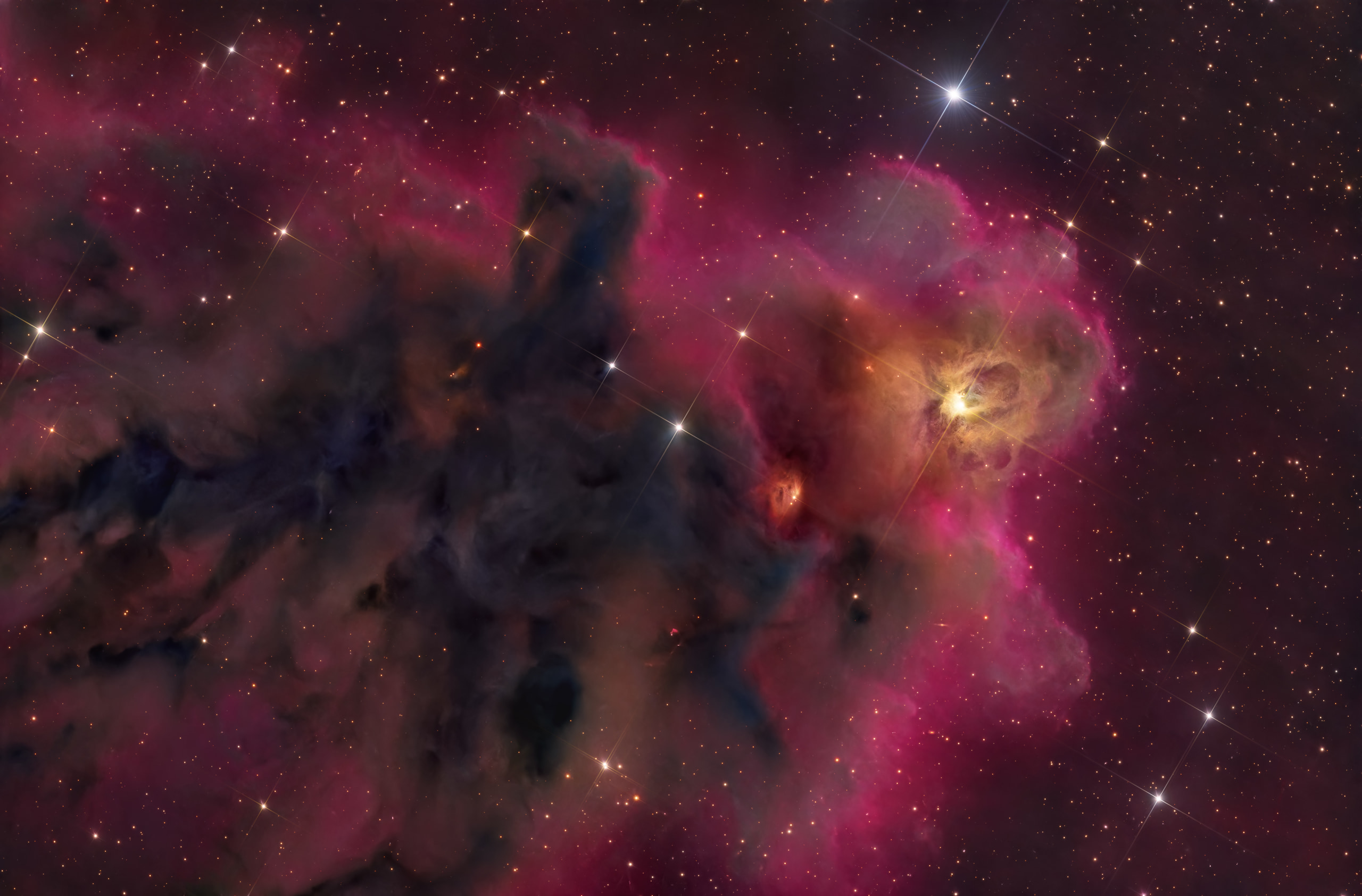
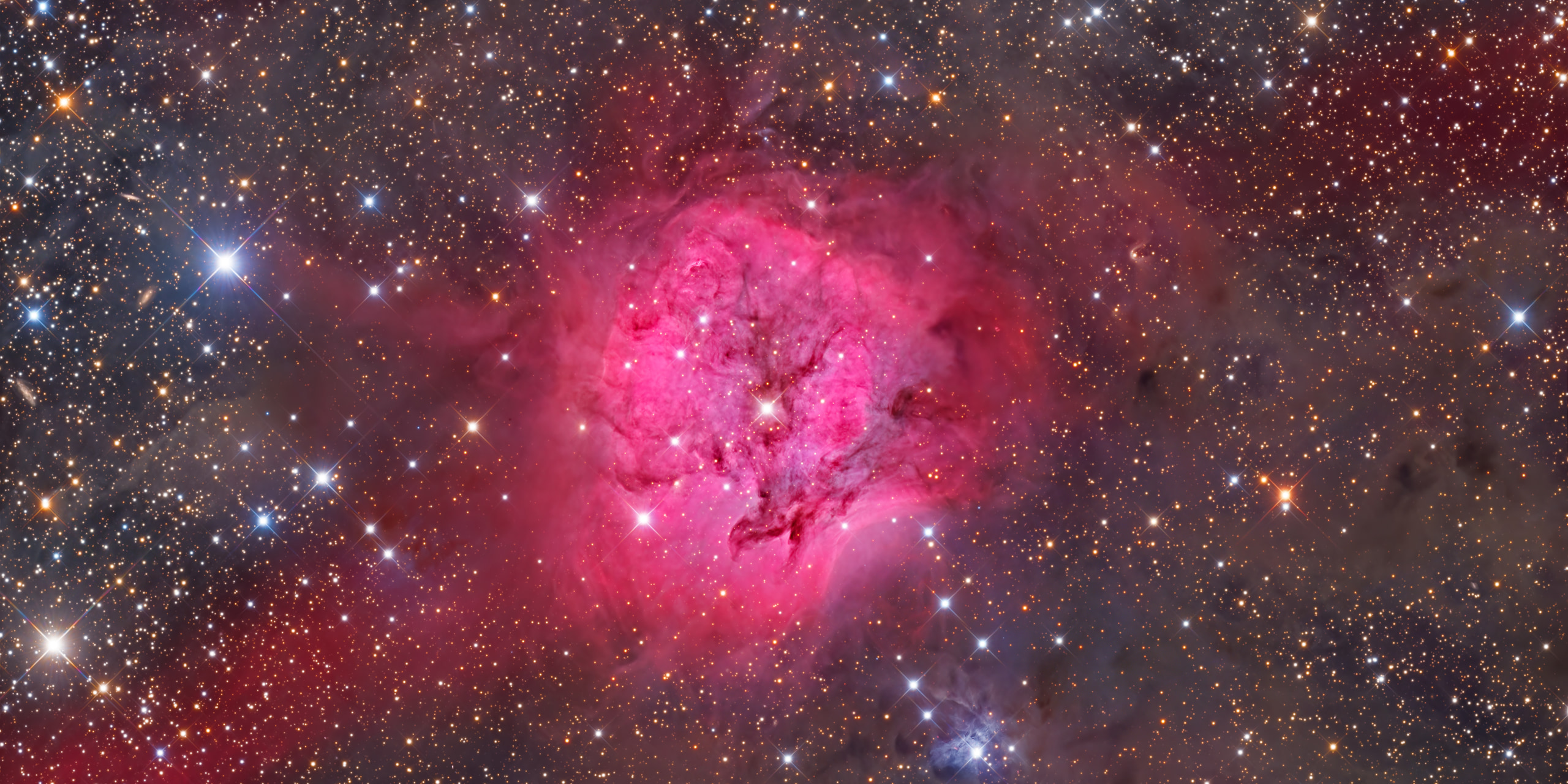
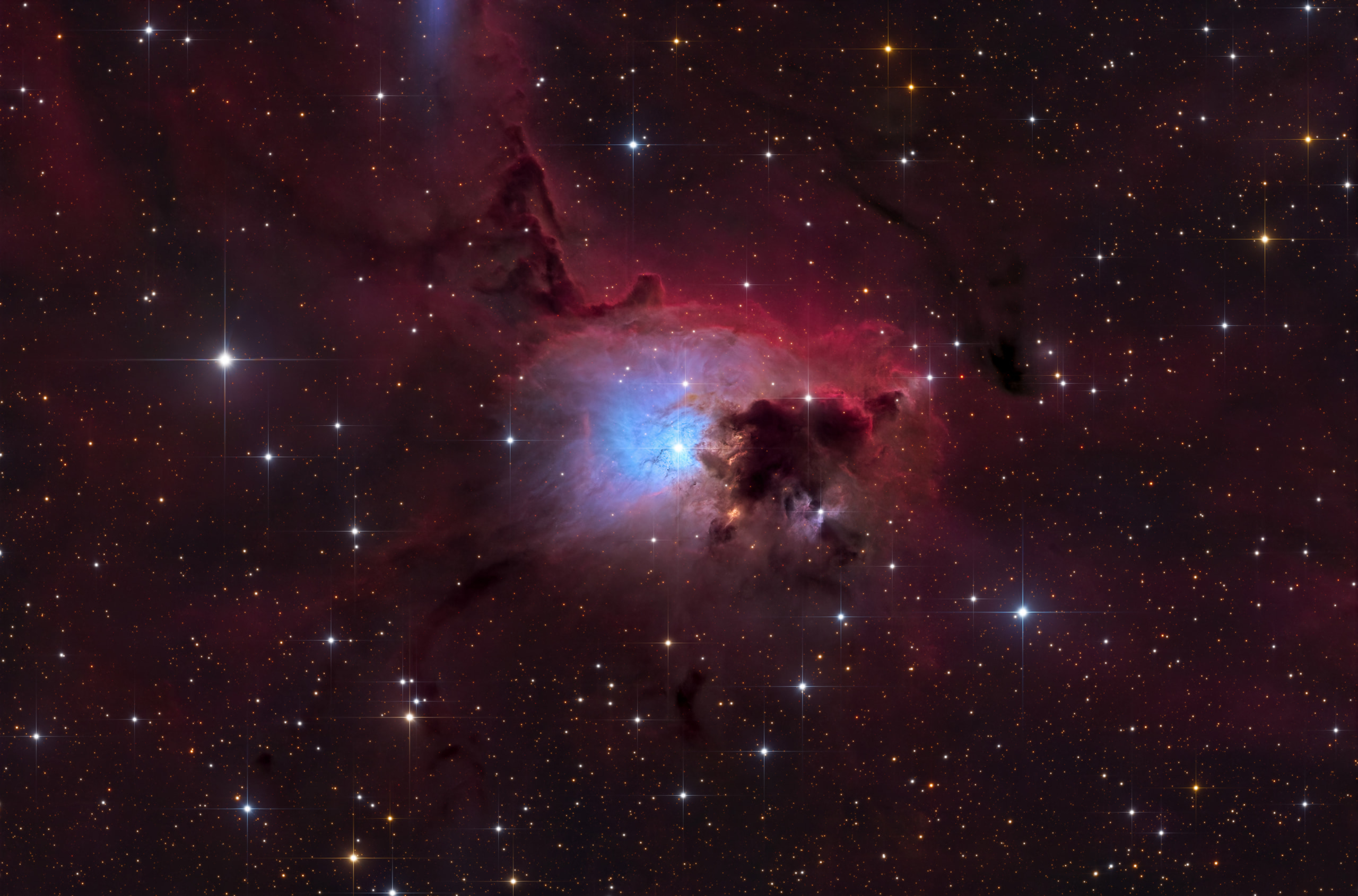
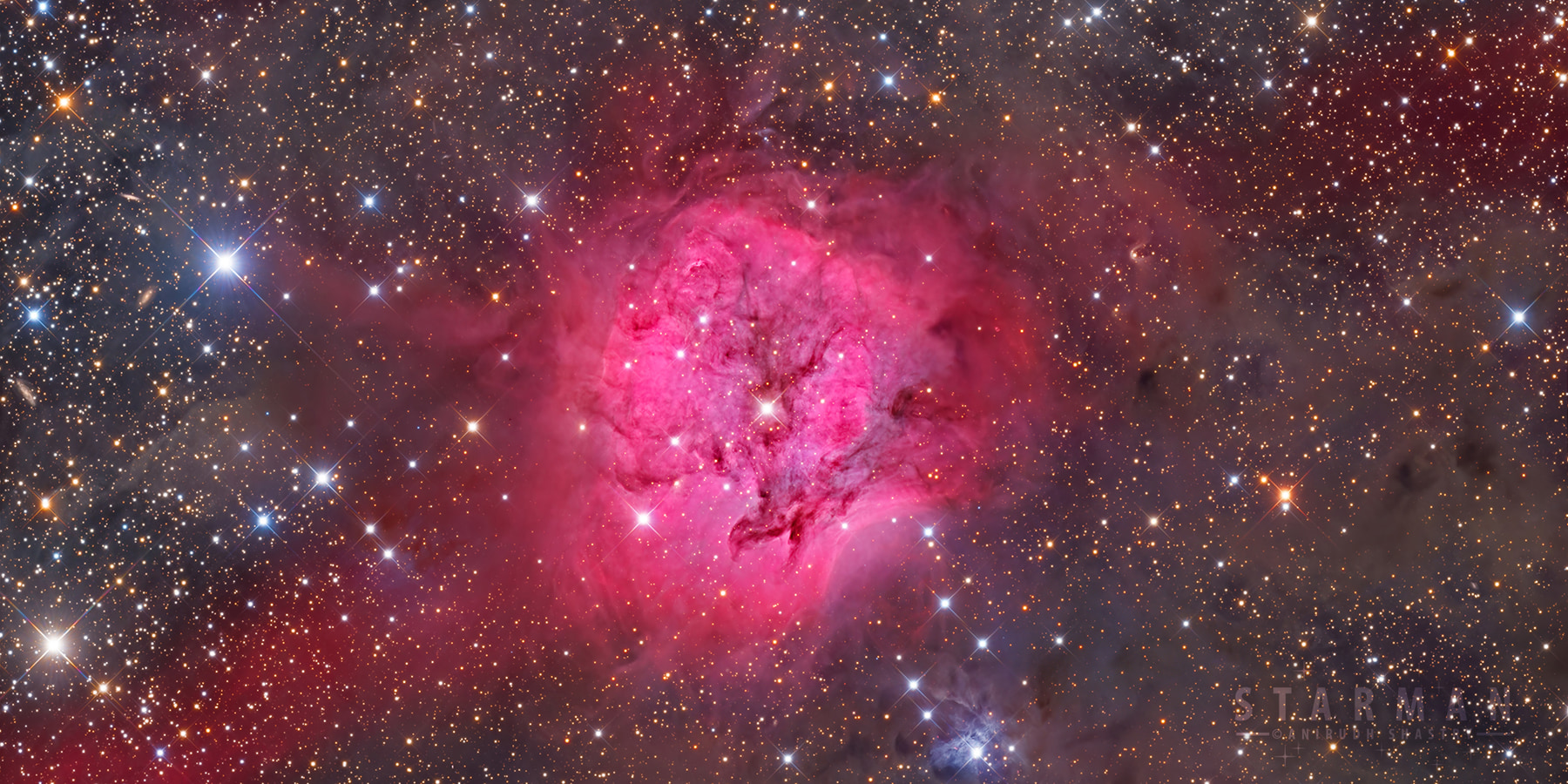
Nestled within the rich star fields of Cygnus, IC 5146, also known as the Cocoon Nebula, is a stunning example of both stellar birth and cosmic artistry. Located approximately 2,500 light-years away, the nebula spans about 15 light-years and glows with the warm hues of hydrogen-alpha and oxygen-III emissions, surrounding a cluster of newly formed stars. At the nebula’s core lies a massive young star, just a few hundred thousand years old, whose radiation illuminates the surrounding gas while stellar winds carve out the nebula’s bubble-like shape.
Astrophotographers are drawn to IC 5146 not only for its radiant emission nebula but also for the intricate dark dust lanes that stream westward — remnants of the larger molecular cloud that birthed the stars within. Capturing the Cocoon requires a balanced blend of narrowband and broadband imaging, revealing both subtle color gradients and sharp structural contrast. This deep-field view from my PlaneWave CDK24 reveals the Cocoon seemingly emerging from a river of dust — the B168 dark nebula — creating a striking visual narrative of star formation piercing through interstellar shadow.
Exceptional seeing and clear skies at SRO this summer meant I was able to acquire just over 40 hours of data on this target in L, R, G, B and Ha, of which around 35.83 hours were usable.