Overview
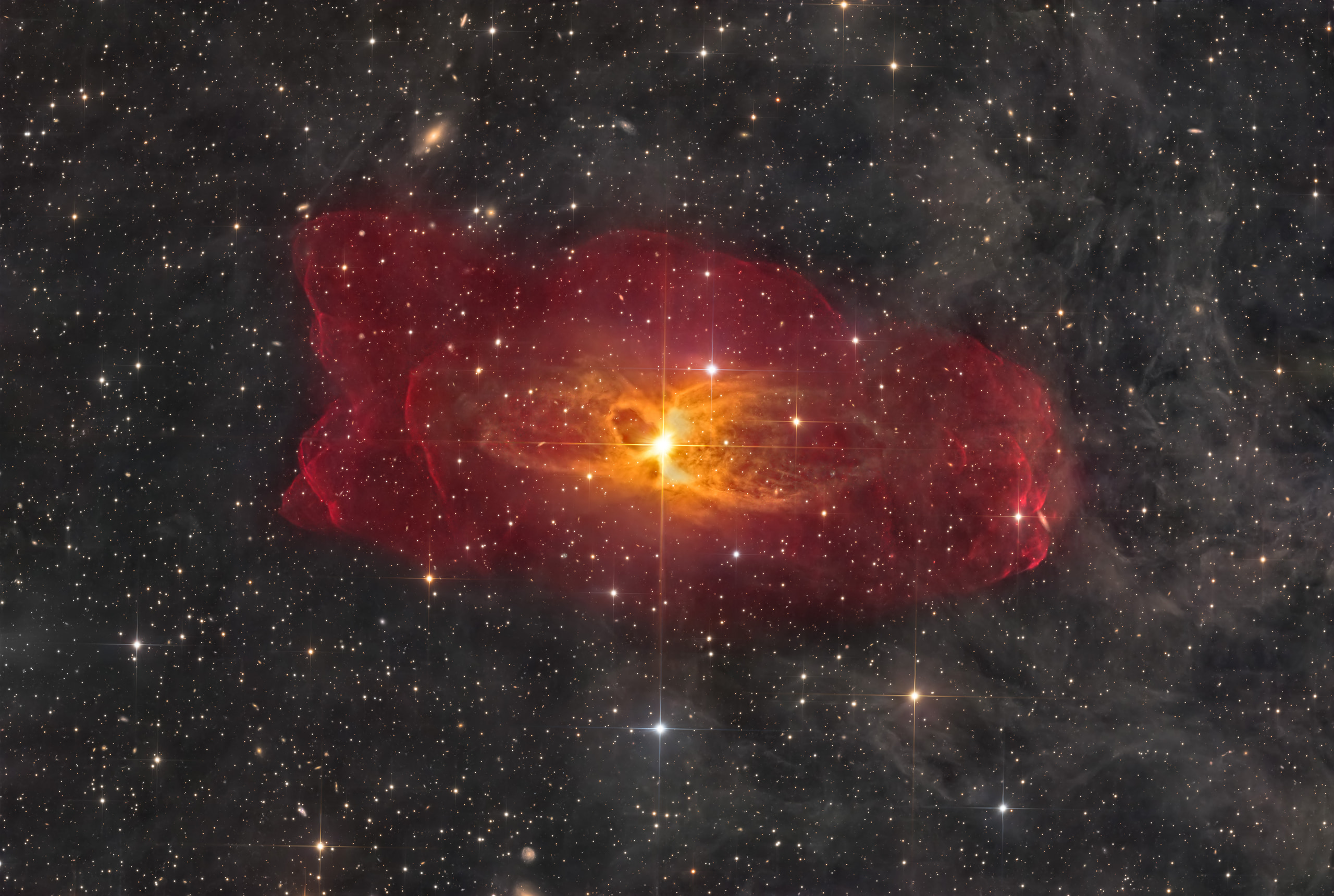
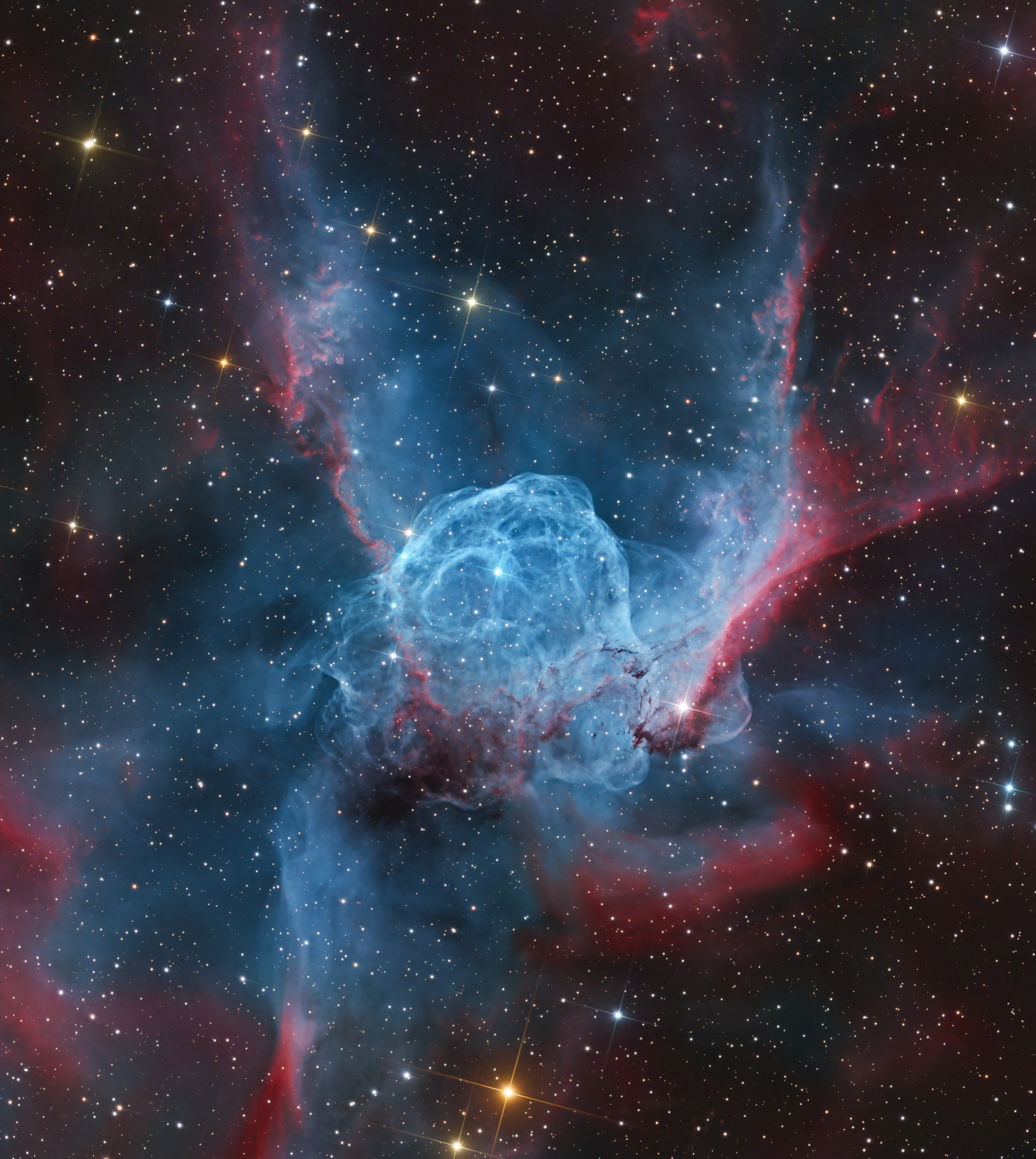
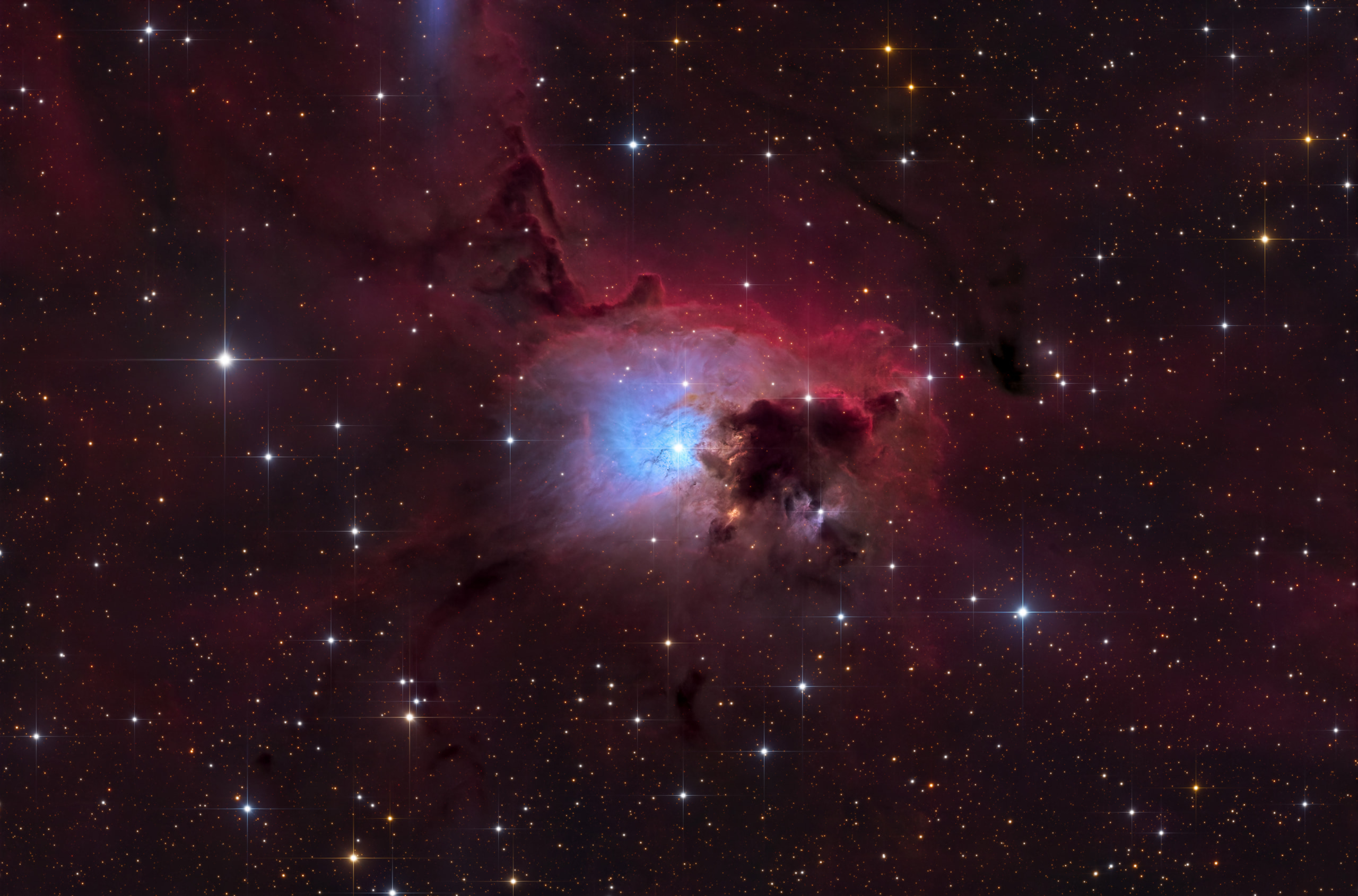
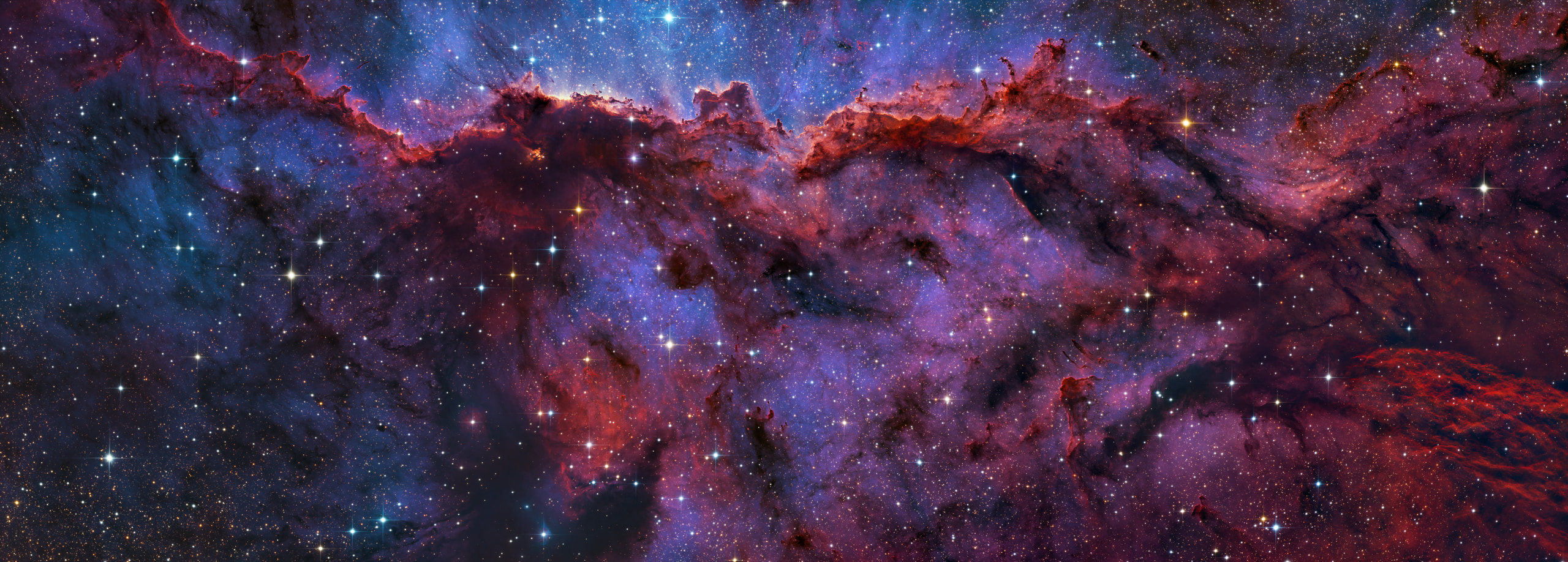
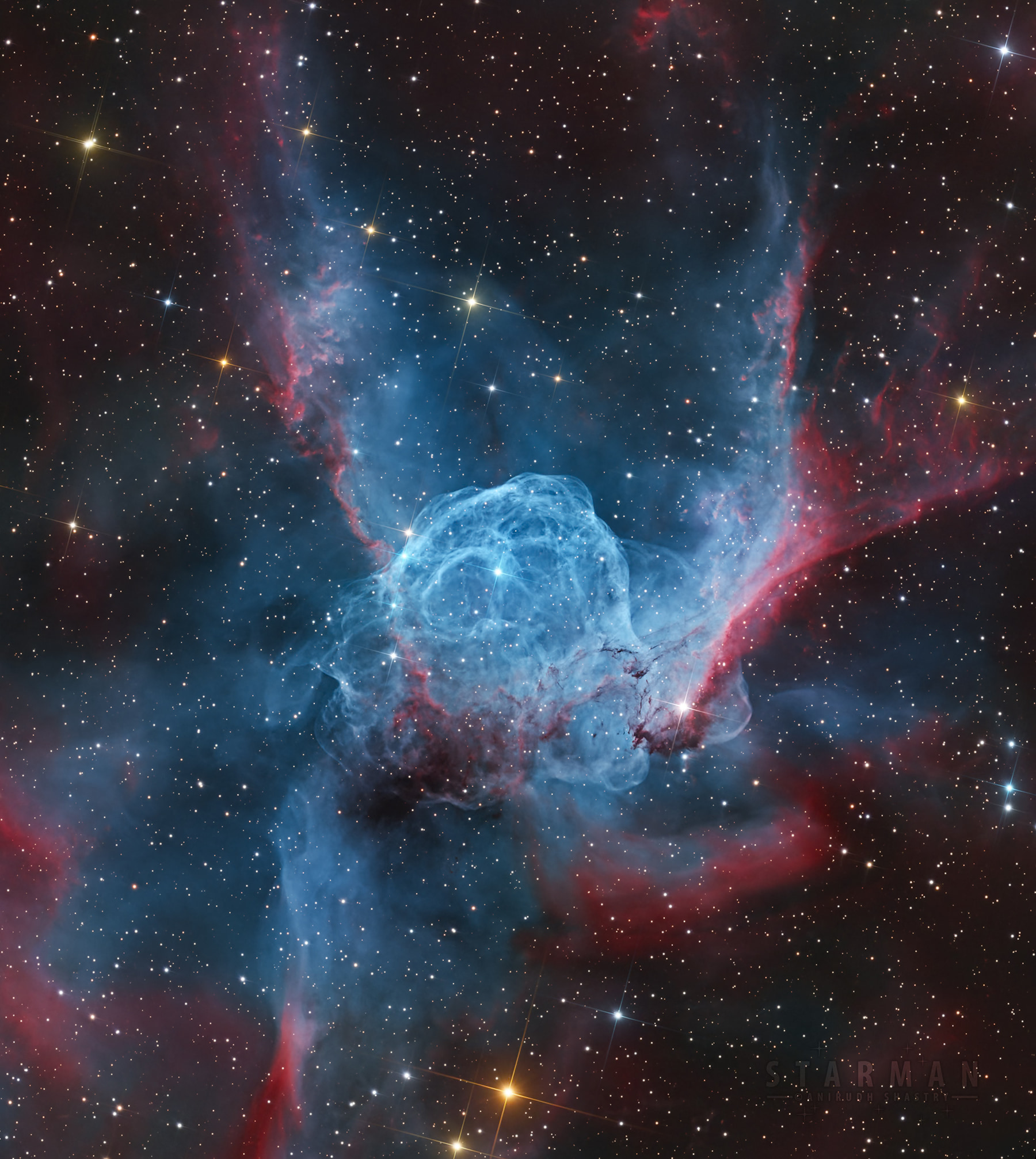
NGC 2359 is most often known as Thor’s Helmet, and sometimes affectionately as the Duck Nebula. Both names make sense: there is a mythic crest, a sweeping shell, and a strange creature-like silhouette emerging from the starfield. But in this rendition, I cannot help seeing something more delicate — almost a cosmic hummingbird, suspended mid-flight, its wings opening into the surrounding darkness while its luminous body glows with electric blue structure.
At the heart of NGC 2359 is a powerful Wolf-Rayet star, one of the rare and massive stellar engines that sculpt the space around them through intense radiation and violent stellar winds. Those winds have carved the surrounding gas into a vast, turbulent bubble, pushing oxygen-rich material outward into translucent blue veils while hydrogen glows along the swept-up edges in deep crimson. The result is a nebula that feels both fragile and ferocious: a creature of light formed by the pressure of a dying star.
This image was acquired in HOO + RGB, allowing the oxygen and hydrogen structures to carry the main nebular form while the RGB data preserves a more natural starfield. The central shell reveals intricate filaments, soft shock fronts, and overlapping folds of gas, while the extended wings stretch outward like motion frozen across interstellar time. Whether one sees a helmet, a duck, or a hummingbird, NGC 2359 remains one of the most beautiful examples of stellar transformation — a massive star writing its final chapters into the surrounding night.